Nobody hands you a manual for this. You get a baby, a changing mat, and a wall of packs with numbers on them. So here's the guide we'd give a friend — plain, practical, and free of the stuff that only sounds useful.
Start with weight, not age
Nappy sizes are set by weight, not by how many months old your baby is. Two babies born the same week can sit two sizes apart, and both are completely normal. Check the weight range on the pack and match it to where your baby is now.
If they're at the very top of one range and the fit is starting to look tight, you're ready for the next size. If they're at the very bottom, staying put usually gives you a better seal.
How to tell the fit is right
A well-fitted nappy looks unremarkable, which is exactly the point. Run through this quickly after each change until it becomes automatic:
- The waistband sits just below the belly button, snug but not digging in
- You can slide two fingers under the waistband without forcing them
- Leg cuffs are pulled out, not tucked in — tucked cuffs are the single most common cause of leaks
- The back is slightly higher than the front
- No red marks left behind at the next change
Signs it's time to size up
Babies rarely give you a clean signal. Instead you get a run of small annoyances that all point the same way: leaks that appear out of nowhere after weeks of none, tabs that now fasten at the very last notch, red pressure lines around the thighs or waist, or a nappy that looks visibly full well before you expected it to.
Two or three of those together usually means the next size up will fix a problem you've been treating as bad luck.
Absorbency and the long night
Daytime and night-time are genuinely different problems. During the day you're changing often, and the priority is comfort and breathability. Overnight you need a core that keeps working for hours without pressing wetness back against the skin.
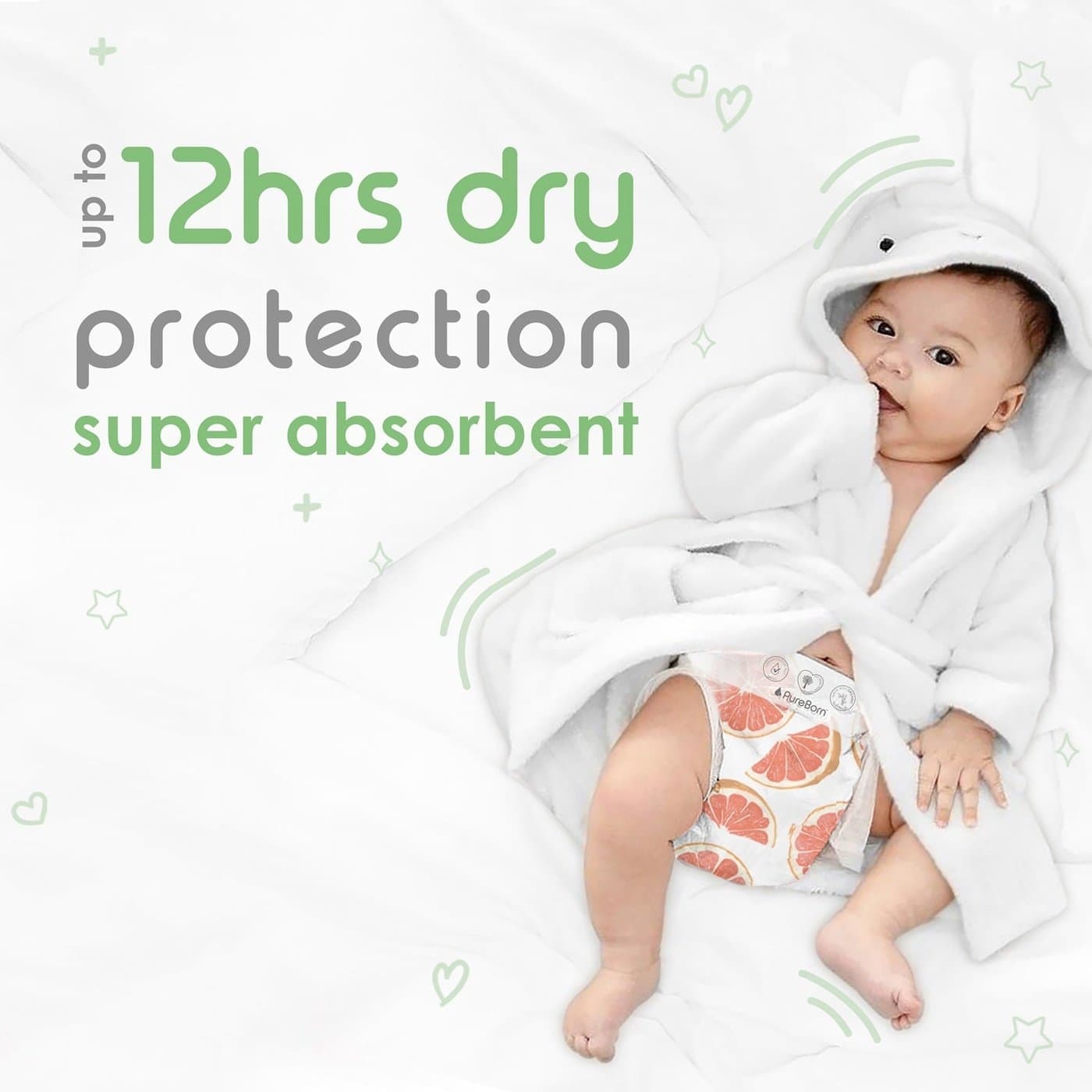
PureBorn nappies use an FSC-certified wood pulp core built for up to 12 hours of dry protection, so a full night doesn't have to mean a 3am change. If you're still getting overnight leaks with a good fit, go up a size for nights only — plenty of parents run two sizes in parallel.
Sensitive skin, in practice
Most nappy rash comes down to moisture, friction, and time. The fixes are unglamorous and they work: change promptly, let the skin air for a minute before the new nappy goes on, and don't fasten tighter than you need to.
Material helps too. A bio-based bamboo top sheet is smooth and breathable, which means less rubbing and less trapped heat — the two conditions rash likes best.
How many will you actually need?
Newborns go through a lot, and the number drops steadily as they grow. Rather than stockpiling one size, buy a little ahead and stay flexible — babies have a habit of outgrowing a bulk order the week it arrives.
If you'd rather not think about it at all, a subscription quietly handles the maths and lets you change size whenever your baby does.
One last thing
You will get this wrong sometimes. Everyone does. A leak at 4am is not a verdict on your parenting — it's usually just a cuff that got tucked in. Check the fit, adjust, carry on.